What is Coastal Adaptation?
Coastal adaptation is an adjustment in natural or human systems in anticipation of, or response to, a changing environment in a way that effectively uses beneficial opportunities or reduces negative efforts, focusing on the unique requirements of coastal systems.
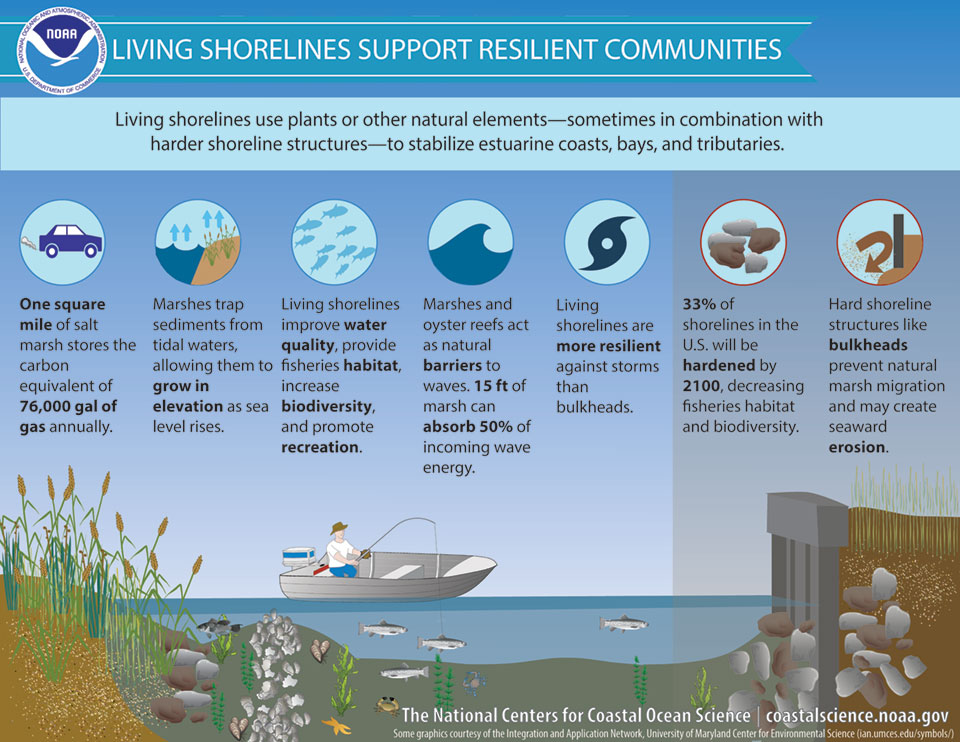
In coastal areas, adaptation solutions such as physically armoring the coast against sea level rise will have to be combined with other infrastructure-based solutions, nature-based solutions and, in some cases, managed retreat from the sea to ensure that communities are protected and can stay resilient in the coming decades.
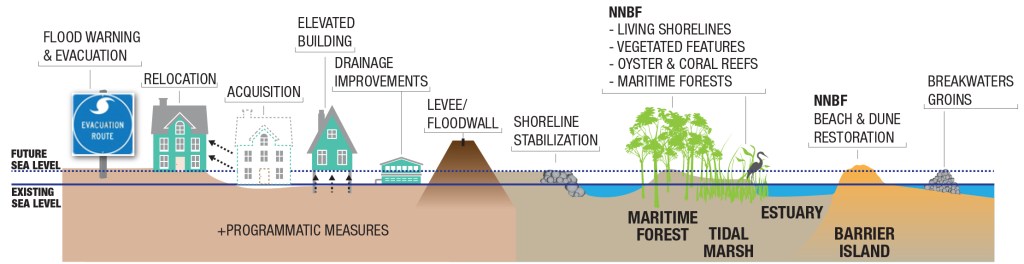
Managing coastal storm risk is a shared responsibility by all levels of government and individual property owners. Not all strategies to reduce risks are engineered solutions. Communities should consider adopting a combination of strategies that emphasize wise use of the floodplain and include structural, non-structural, natural and nature-based features, and programmatic measures to manage risk. Improved land use planning, responsible evacuation planning, and strategic retreat are important and cost-effective actions that are proven to reduce coastal flood risks. But no matter what risk reduction strategies are taken, there will always be residual risk. (United States Army Corp of Engineers. https://www.usace.army.mil/Media/Images/igphoto/2001007580/)
 Florida's Vanishing Heritage