Kennedy Space Center is located on north Merritt Island, Brevard County’s barrier island. In the early 1960s the recently formed NASA began acquiring land on the northern section of Merritt Island, eventually amassing more than 200 square miles. In 1968 the renamed John F. Kennedy Space Center became the primary launch site for the U.S. space program. After the end of the Apollo Program Kennedy Space Center serviced the U.S. space shuttle program, the Russian Soyuz Program, and commercial space programs, in addition to supporting the International Space Station. The Kennedy Space Center property includes seven historic districts, two dozen historic properties, roughly 100 archaeological sites, one National Historic Landmark, and dozens of sites listed or eligible to be listed on the National Register of Historic Places.
The majority of northern Merritt Island is a system of interlocking wetlands and canals that connect to the Intercoastal Waterway. Much of the facility’s 200+ square miles are permanently or seasonally wet. The areas surrounding the shuttle landing facility, the VAB, the crawlerway, launch pads 39a and 39b, and the visitors complex are all at roughly 3-4ft of elevation. With sea level rise affecting both the front shore and the back shore of the island, the entire complex is extremely vulnerable to the effects of sea level rise. Under 21st century sea level rise projections vast areas of Merritt Island will be subject to permanent inundation and the remaining land will be highly vulnerable to erosion and periodic flooding.
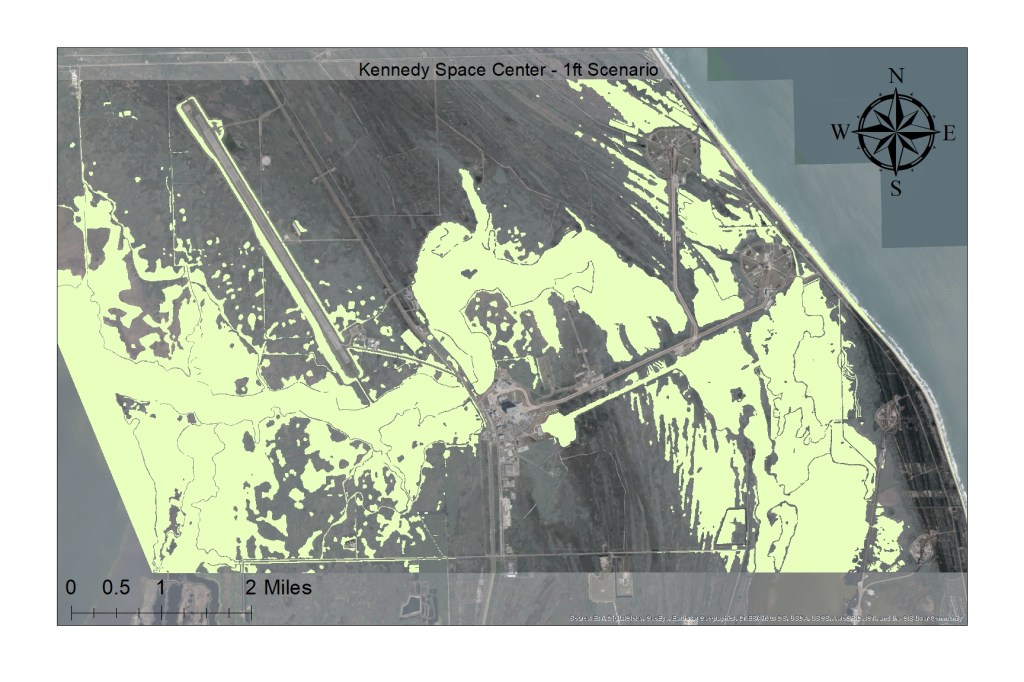
1ft Scenario
In a 1-foot Sea Level Rise scenario, significant portions of the bank of Banana Creek, between the Shuttle Landing Facility and the Vehicle Assembly Building are at risk of inundation.
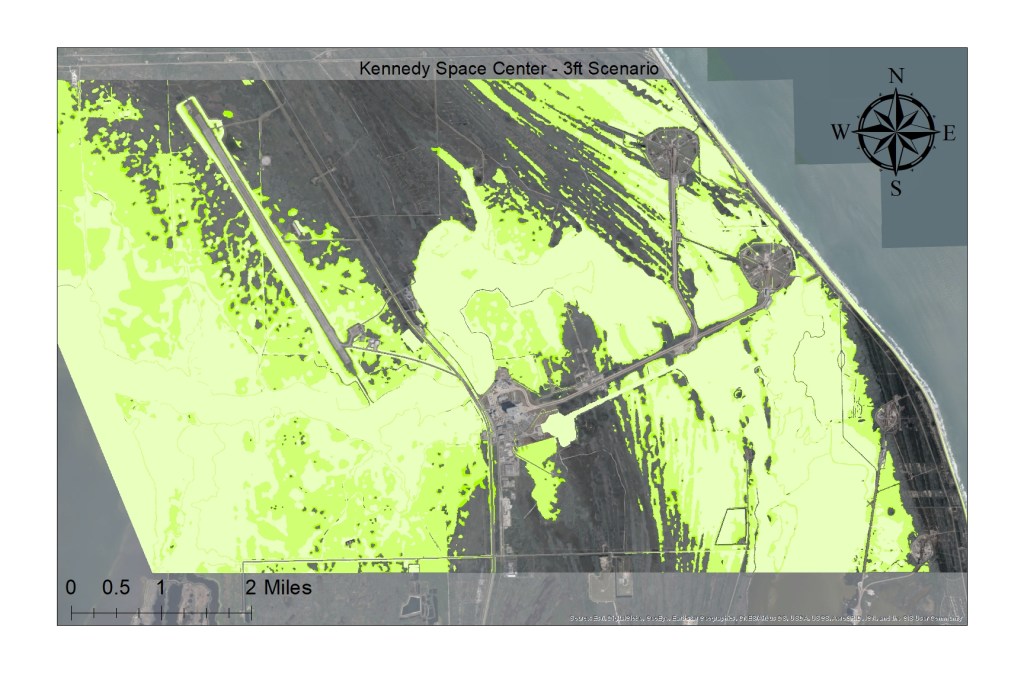
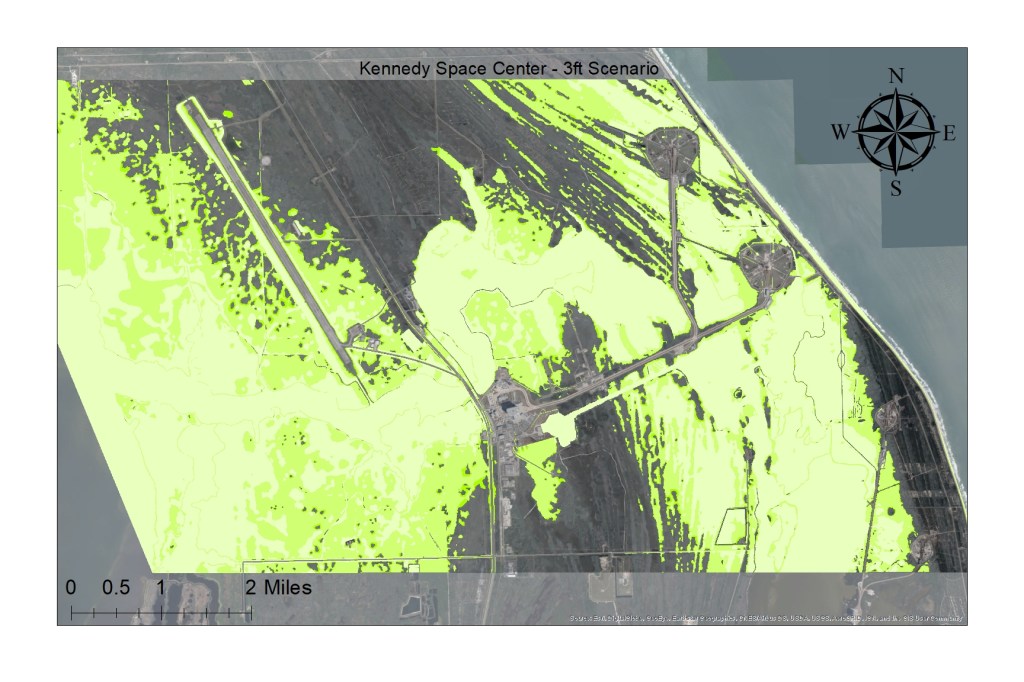
3ft Scenario
At 3-feet of rise large portions of the study area are subject to permanent inundation. Rising seas will begin to encroach on the historic launch pads 39a and 39b.
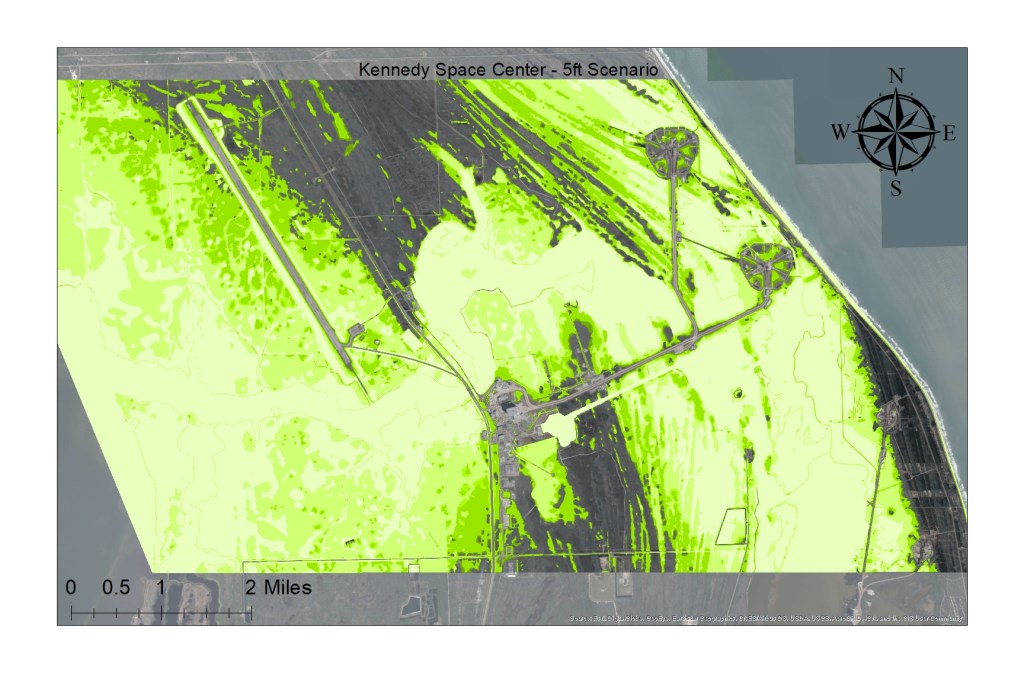
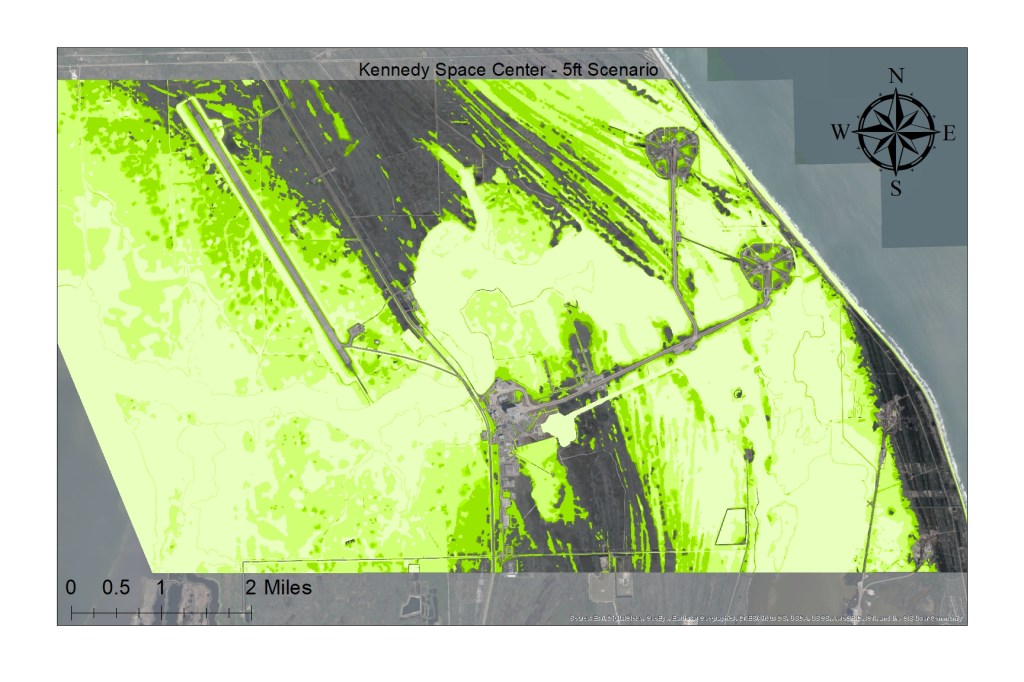
5ft Scenario
Under a 5-foot rise scenario, the study area is likely to be bisected by Banana Creek, with significant permanent inundation to the north and south of the creek.
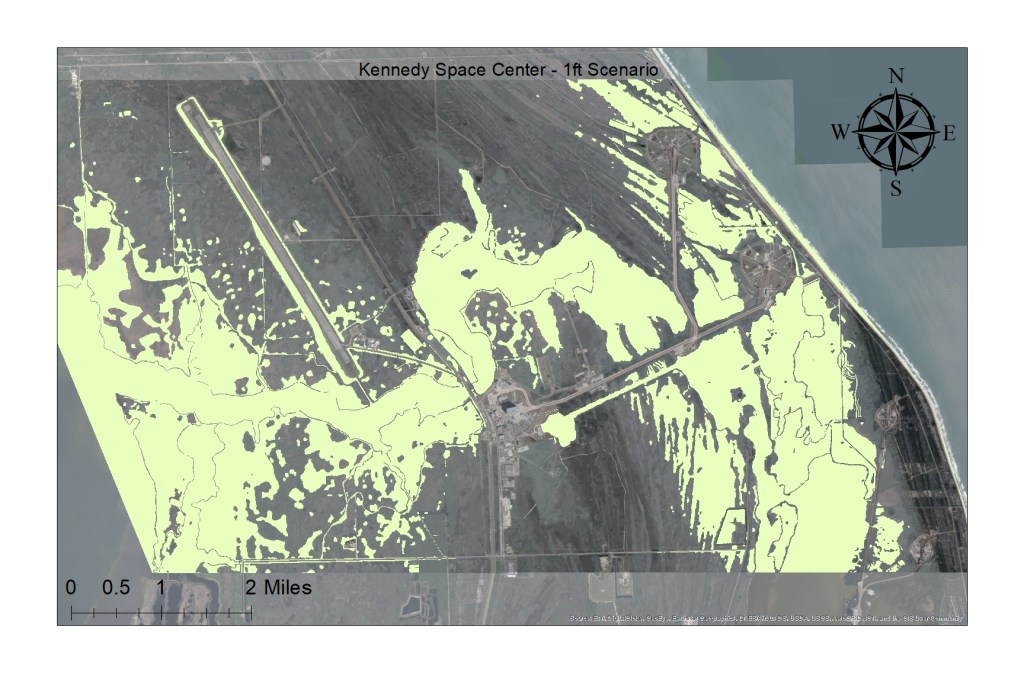

 Florida's Vanishing Heritage